Cheek Filler Before and After: Everything You Need
Introduction:
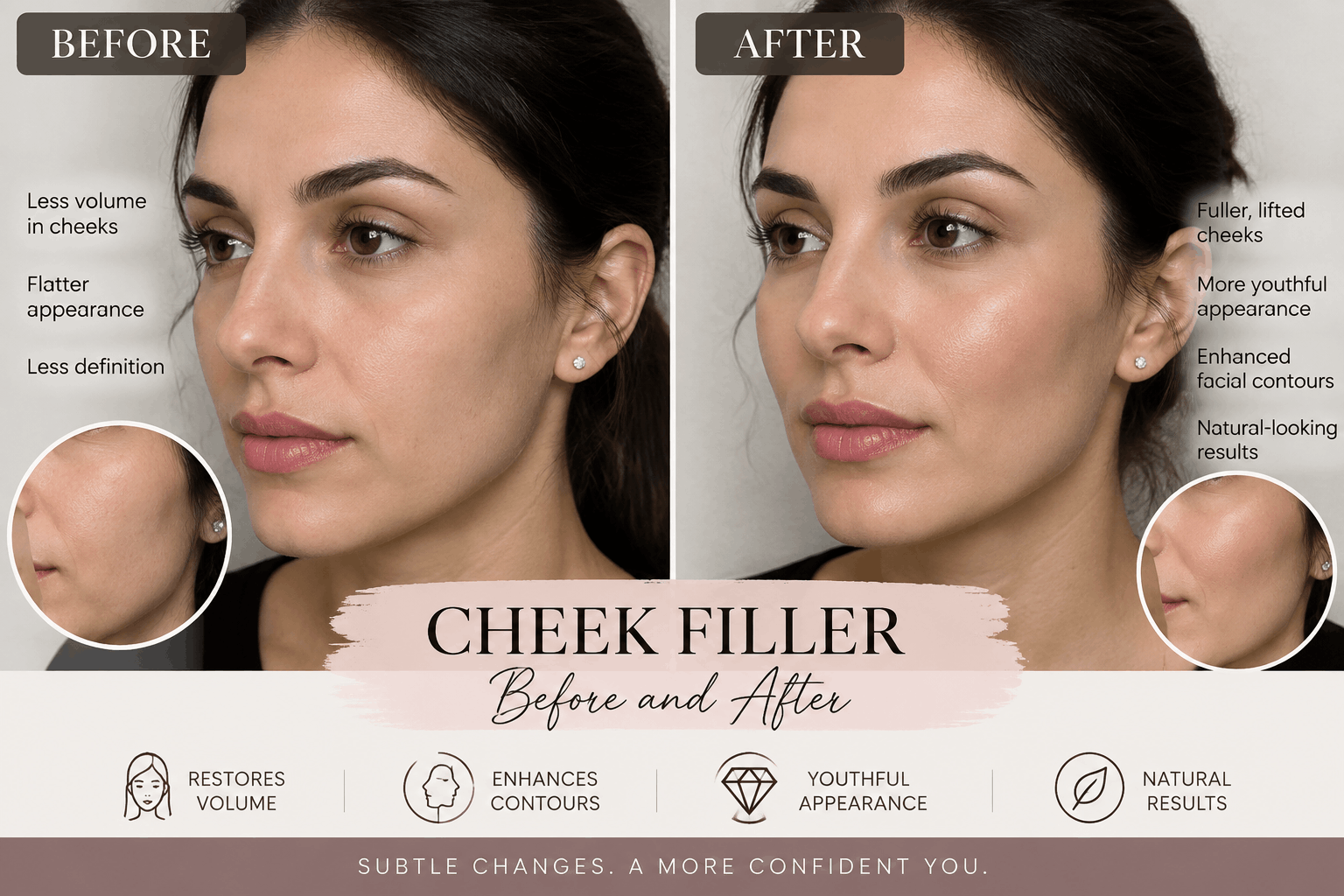
The appearance of the cheeks plays an important role in overall facial balance, youthfulness, and definition. Over time, factors such as aging, genetics, weight changes, and natural collagen loss can affect cheek volume, making the face appear flatter, tired, or less defined. This is one of the main reasons why many people search for cheek filler before and after results to understand how this popular cosmetic treatment can enhance facial features.
Cheek filler is a non-surgical aesthetic procedure designed to restore lost volume, improve cheekbone definition, and create a more refreshed appearance. Unlike surgical procedures, cheek fillers require minimal downtime and can provide noticeable improvements without major changes to a person’s natural appearance.
The goal of modern cheek filler treatments is not to create an artificial or overfilled look. Instead, experienced professionals focus on enhancing the existing facial structure, improving proportions, and achieving results that look natural and balanced.
Before choosing cheek fillers, it is important to understand how the treatment works, what changes can be expected, how long results last, and what factors influence the final outcome. This complete guide explains everything you need to know about cheek filler before and after transformations.
What Are Cheek Fillers?
Cheek fillers are injectable cosmetic treatments that add volume and shape to the cheeks using dermal filler materials. These fillers are designed to restore fullness, improve facial contours, and support areas that may have lost volume over time.
Most cheek fillers are made from hyaluronic acid, a naturally occurring substance found in the body that helps maintain moisture and skin structure. Because hyaluronic acid attracts water molecules, it can help create a smoother and fuller appearance when strategically injected into the cheek area.
During a cheek filler treatment, a qualified cosmetic professional places small amounts of filler beneath the skin in specific areas of the cheeks. The placement depends on the person’s facial anatomy and desired goals.
Cheek fillers may be used for:
- Restoring lost cheek volume
- Enhancing cheekbone definition
- Improving facial symmetry
- Creating a lifted appearance
- Softening hollow areas
- Improving overall facial harmony
The treatment is customized because every face has unique features and needs.
Why Do People Choose Cheek Filler Treatment?
Many people choose cheek fillers because they want facial enhancement without undergoing surgery. The cheeks are one of the most important areas of facial structure, and even small changes can create noticeable improvements.
Some common reasons people consider cheek fillers include:
Restoring Volume Lost With Age
As people age, the face naturally experiences changes in fat distribution, collagen production, and skin elasticity. The cheeks may gradually lose fullness, causing the face to appear more hollow or aged.
Cheek fillers can restore some of this lost volume and help create a softer, more youthful appearance.
Improving Cheekbone Definition
Some individuals naturally have less prominent cheekbones and want more facial structure. Cheek fillers can enhance the projection of the cheek area and create a more sculpted appearance.
Creating Better Facial Balance
Facial beauty is often associated with harmony between different features. Cheek fillers can help improve the relationship between the cheeks, eyes, nose, lips, and jawline.
Achieving a Refreshed Appearance
Many people choose cheek fillers because they want to look more refreshed while still appearing like themselves. A successful treatment enhances natural features rather than changing someone’s identity.
Cheek Filler Before: What Does the Face Look Like Before Treatment?
Before receiving cheek fillers, people may notice different concerns depending on their age, genetics, and facial structure.
Common signs before cheek filler treatment include:
Flat Cheeks
Some people naturally have less volume in their cheeks, which can make the face appear less defined.
Hollow Mid-Face Area
Loss of facial volume can create hollow areas around the cheeks and under-eye region.
Reduced Facial Contour
The cheeks provide important structure to the face. When volume decreases, facial contours may become less noticeable.
Tired Appearance
Volume loss can sometimes make the face appear tired or less energetic, even when someone feels healthy.
It is important to remember that these concerns are completely normal. Cheek filler is a personal choice for people who want to enhance or restore certain facial features.
Cheek Filler Before and After: What Changes Can You Expect?
One of the biggest reasons people research cheek filler before and after photos is to understand realistic results.
After treatment, many patients notice improvements such as:
More Defined Cheekbones
Adding volume to strategic areas of the cheeks can create stronger definition and improve facial structure.
Fuller and More Youthful Cheeks
Cheek fillers can restore volume that has been lost due to aging or other factors.
Improved Facial Proportions
A balanced cheek structure can improve the relationship between different facial features.
Softer Facial Appearance
By restoring volume, cheek fillers may reduce the appearance of certain shadows and create smoother contours.
The final results depend on the individual, the amount of filler used, and the expertise of the provider.
The Cheek Filler Procedure: Step-by-Step Process
Understanding the procedure can help people feel more comfortable before treatment.
Step 1: Consultation
The process begins with a consultation where the provider evaluates the face and discusses expectations.
During this appointment, the provider may consider:
- Facial shape
- Skin quality
- Existing cheek volume
- Desired results
- Previous cosmetic procedures
This step helps create a personalized treatment plan.
Step 2: Preparing the Skin
Before injections, the treatment area is cleaned carefully. Some providers use numbing cream or fillers containing lidocaine to improve comfort.
Step 3: Filler Injection
The provider injects small amounts of filler into carefully selected areas of the cheeks.
The technique depends on whether the goal is:
- Volume restoration
- Cheekbone enhancement
- Facial balancing
- Subtle lifting effect
The procedure usually takes around 30 to 60 minutes.
Step 4: Checking Results
After injection, the provider evaluates the shape and symmetry of the cheeks to ensure the filler has been placed correctly.
How Soon Can You See Cheek Filler Results?
Many people notice changes immediately after their cheek filler treatment because the filler adds volume right away.
However, the first few days may not represent the final result because temporary swelling can affect appearance.
A typical timeline may look like this:
Immediately After Treatment
The cheeks may appear fuller, and some swelling or redness may occur.
After One Week
Most temporary swelling usually improves, and the cheeks begin to look more natural.
After Several Weeks
The filler settles completely, allowing the final cheek filler results to become more visible.
The exact timeline varies from person to person.
Cheek Filler Recovery: What Happens After Treatment?
One of the advantages of cheek fillers is that recovery is usually minimal compared with surgical procedures.
After treatment, people may experience:
- Mild swelling
- Bruising
- Tenderness
- Slight redness
These effects are generally temporary.
To support recovery, many professionals recommend:
- Avoiding excessive touching of the treated area
- Avoiding intense exercise immediately after treatment
- Following provider instructions
- Protecting the skin from excessive heat
Proper aftercare can help support healing and maintain good results.
How Long Do Cheek Filler Results Last?
The longevity of cheek fillers depends on several factors, including:
- Type of filler used
- Amount injected
- Individual metabolism
- Lifestyle factors
- Treatment technique
Many cheek fillers can last approximately 12 to 24 months. Some people may notice results lasting longer, while others may require maintenance treatments sooner.
Regular follow-up appointments can help maintain the desired appearance.
Are Cheek Fillers Safe?
Cheek fillers are considered a commonly performed cosmetic treatment when administered by a qualified and experienced professional.
Like any cosmetic procedure, cheek fillers have possible risks and side effects.
Common temporary effects include:
- Swelling
- Bruising
- Redness
- Sensitivity
- Mild discomfort
Choosing a trained injector is one of the most important factors in achieving safe and natural-looking results.
A qualified professional understands facial anatomy and knows how to place filler correctly.
How to Choose the Right Provider for Cheek Fillers
The skill and experience of the provider can significantly affect cheek filler before and after results.
When choosing a provider, consider:
Experience With Facial Anatomy
The face contains many important structures, so proper knowledge of anatomy is essential.
Natural-Looking Results
Look for providers who focus on enhancing natural beauty rather than creating excessive volume.
Consultation Approach
A good provider should listen to your goals, explain realistic expectations, and create an individualized plan.
Before and After Examples
Reviewing previous patient results can help you understand the provider’s treatment style.
Cheek Filler Benefits Compared With Surgical Options
Many people choose cheek fillers because they provide several advantages compared with surgical procedures.
Benefits include:
- No major surgery
- Minimal downtime
- Adjustable results
- Quick treatment sessions
- Natural enhancement
- Temporary option for those unsure about permanent changes
Because fillers are temporary, some people appreciate the flexibility of adjusting their appearance over time.
Who Is a Good Candidate for Cheek Fillers?
Cheek fillers may be suitable for adults who want to improve facial volume or definition.
Good candidates often include people who:
- Have realistic expectations
- Want non-surgical enhancement
- Have volume loss in the cheeks
- Want improved facial balance
- Are in generally good health
A consultation with a qualified professional can determine whether cheek fillers are appropriate.
Frequently Asked Questions
Frequently Asked Questions About Cheek Filler Before and After
1. How long does it take to see cheek filler before and after results?
Most people notice an immediate difference after cheek filler treatment because the filler adds volume instantly.
2. How long do cheek filler results usually last?
Cheek filler results can typically last between 12 and 24 months, depending on factors such as the type of filler used, individual metabolism, lifestyle, and the amount of filler injected.
3. Do cheek fillers look natural after treatment?
Yes, when performed by an experienced and qualified professional, cheek fillers can create natural-looking results.
4. Is there any downtime after cheek filler treatment?
Cheek fillers usually require minimal downtime. Some people may experience temporary swelling, bruising, redness, or mild tenderness after treatment.
5. Are cheek fillers safe?
Cheek fillers are generally considered safe when performed by a trained and experienced injector.
6. Do Cheek Fillers Make You Look Younger?
Cheek fillers can create a refreshed appearance by restoring volume and improving facial contours. However, results vary depending on individual facial structure.
7. Do Cheek Fillers Look Natural?
When performed correctly, cheek fillers can look very natural. The goal is usually subtle enhancement rather than dramatic change.
8. Are Cheek Fillers Painful?
Most people experience only mild discomfort because numbing methods are commonly used during treatment.
9. Can Cheek Fillers Be Removed?
Certain types of fillers, especially hyaluronic acid fillers, may be reversible with specific medical treatments if necessary.
10.How Much Cheek Filler Is Needed?
The amount varies depending on facial structure, goals, and the provider’s assessment.
Final Thoughts: Understanding Cheek Filler Before and After Transformations
Cheek filler before and after results demonstrate how a non-surgical treatment can enhance facial structure, restore lost volume, and create a refreshed appearance. Whether someone wants stronger cheekbone definition, improved facial balance, or a more youthful look, cheek fillers offer a customizable option.
The most successful results come from choosing an experienced professional who understands facial anatomy and focuses on natural-looking improvements. A personalized consultation is the best way to understand what cheek fillers can achieve based on your unique features.
With proper treatment planning, realistic expectations, and expert care, cheek fillers can provide subtle yet noticeable improvements that help people feel more confident in their appearance.